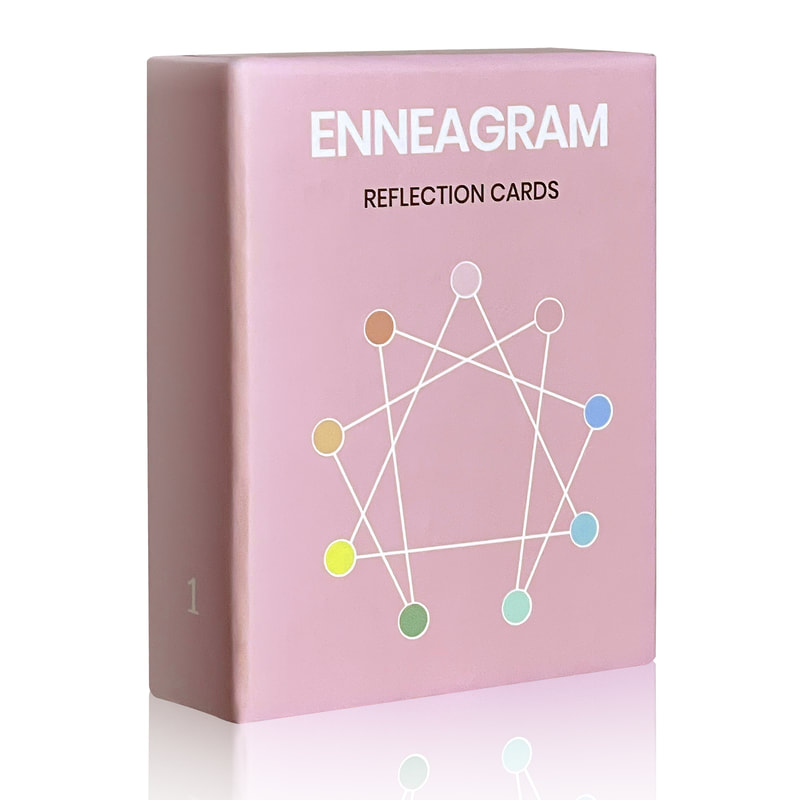
What is the Enneagram?
The Enneagram (ANY-uh-GRAM) is a tool for understanding why you do what you do, and for seeing how the people around you experience the world differently. It's a personality system built around nine types, each rooted in a core fear and motivation formed early in life. Because it accounts for how you show up under stress versus when you're thriving, it's more nuanced than static labels like "introvert" or "leader."
Don't know your Enneagram type? While online tests can't guarantee 100% accuracy, they're a great starting point. Take my short and free quiz to learn more.
Take the quiz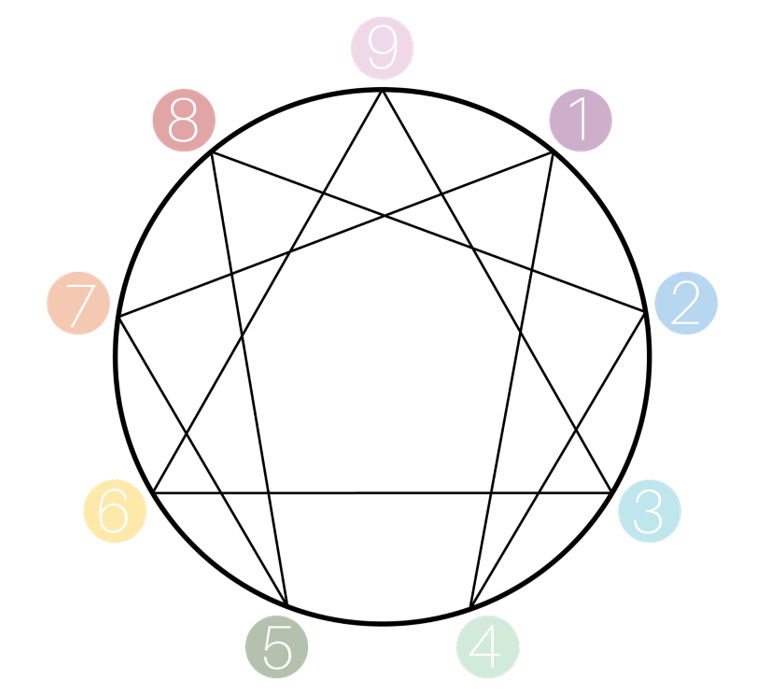
Frequently asked questions
How is the Enneagram different from other personality tools such as DiSC or The Big Five?
Tools like DiSC and the Big Five describe how you behave: your communication style, where you fall on traits like extraversion or conscientiousness. The Enneagram focuses on why you behave that way, the core fear and motivation driving the pattern, which is what makes it useful for real behavior change instead of just a label. It also accounts for how you show up differently under stress versus when you're healthy and thriving, something most trait-based tools don't capture.
How do I learn more about the nine types?
Review the nine type descriptions below for a brief overview, take the test at the top of the page, or for more detailed information, visit enneagraminstitute.com. The description that feels most uncomfortable or convicting is often your real type.
What if I resonate with more than one type?
If two neighboring numbers stand out (like 8 and 9), you may be one type with a wing of the other. If two unrelated numbers stand out (like 1 and 7), check the growth and stress lines: connected types often show up together depending on whether you're healthy or under pressure.
It's also normal to relate to all nine types to some degree, since we carry all of them inside us. Everyone has one dominant type that connects to that type's core fear and motivation, and that's the one worth identifying. The goal isn't to prove you fit the label; it's to become aware of your dominant type so you can grow beyond it and outside of that automatic framework.
Do you cover triads, wings, and growth/stress numbers during workshops?
It depends. There's generally not time to go into these dimensions of the Enneagram during an introductory training, but they're a great addition for longer workshops, individual coaching, or follow-up sessions.
Have more questions?
Schedule a consultationEnneagram Type Descriptions
Review the descriptions below for a high-level overview of each Enneagram type.
The Perfectionist
- Detail-oriented and organized
- High standards for self and others
- Strong sense of right and wrong
- Can be critical or rigid
- Basic Fear
- Being bad or corrupt
- Basic Desire
- To be perfect, good, without fault
- Triad
- Gut (Anger)
- Wings
- Type 9, Type 2
- In Stress
- Type 4 (become disconnected, alienated)
- In Growth
- Type 7 (care-free, spontaneous)
The Helper
- Prioritizes others' needs
- Warm and welcoming
- Empathetic and intuitive
- Can be indirect or passive-aggressive
- Basic Fear
- Being unloved or unwanted
- Basic Desire
- To be needed, loved, appreciated
- Triad
- Heart (Shame)
- Wings
- Type 1, Type 3
- In Stress
- Type 8 (become blunt, hostile)
- In Growth
- Type 4 (emotional regulation, acknowledge needs)
The Achiever
- Driven and hard-working
- Confident and adaptable
- Skilled at motivating others
- Can equate worth with achievement
- Basic Fear
- Being worthless or without value
- Basic Desire
- To succeed, be admired, attain status
- Triad
- Heart (Shame)
- Wings
- Type 2, Type 4
- In Stress
- Type 9 (apathetic, irresponsible)
- In Growth
- Type 6 (collaborative, altruistic)
The Individualist
- Creative and expressive
- Emotionally attuned
- Values authenticity and originality
- Can be moody or withdrawn
- Basic Fear
- Being flawed or insignificant
- Basic Desire
- To be special or unique
- Triad
- Heart (Shame)
- Wings
- Type 3, Type 5
- In Stress
- Type 2 (needy, clingy)
- In Growth
- Type 1 (emotionally stable, objective)
The Investigator
- Analytical and knowledgeable
- Logical and curious
- Values independence and privacy
- Can seem detached or withholding
- Basic Fear
- Being incapable or overwhelmed
- Basic Desire
- To understand, be competent
- Triad
- Head (Fear)
- Wings
- Type 4, Type 6
- In Stress
- Type 7 (scattered, overwhelmed)
- In Growth
- Type 8 (decisive, confident)
The Loyalist
- Loyal and committed
- Great at anticipating problems
- Community-oriented
- Can struggle to trust others
- Basic Fear
- Being without support or guidance
- Basic Desire
- To be secure, certain
- Triad
- Head (Fear)
- Wings
- Type 5, Type 7
- In Stress
- Type 3 (image-conscious, competitive)
- In Growth
- Type 9 (relaxed, harmonious)
The Enthusiast
- Idea generator, great at starting
- Optimistic and upbeat
- Spontaneous and fun
- Can struggle to follow through
- Basic Fear
- Being trapped or deprived
- Basic Desire
- To feel satisfied and content
- Triad
- Head (Fear)
- Wings
- Type 6, Type 8
- In Stress
- Type 1 (critical, impatient)
- In Growth
- Type 5 (analytical, focused)
The Challenger
- Direct and confident
- Protective of others
- Decisive under pressure
- Can come across as intimidating
- Basic Fear
- Being controlled or harmed
- Basic Desire
- To feel in charge of their life
- Triad
- Gut (Anger)
- Wings
- Type 7, Type 9
- In Stress
- Type 5 (misunderstood, isolated)
- In Growth
- Type 2 (helpful, empathetic)
The Peacemaker
- Agreeable and gentle
- Empathetic and forgiving
- Sees all sides of a conflict
- Can avoid conflict to keep the peace
- Basic Fear
- Being in conflict or disconnected
- Basic Desire
- Inner harmony, peace of mind
- Triad
- Gut (Anger)
- Wings
- Type 8, Type 1
- In Stress
- Type 6 (worried, passive-aggressive)
- In Growth
- Type 3 (energetic, confident)
Still not sure about your type?
Take the quiz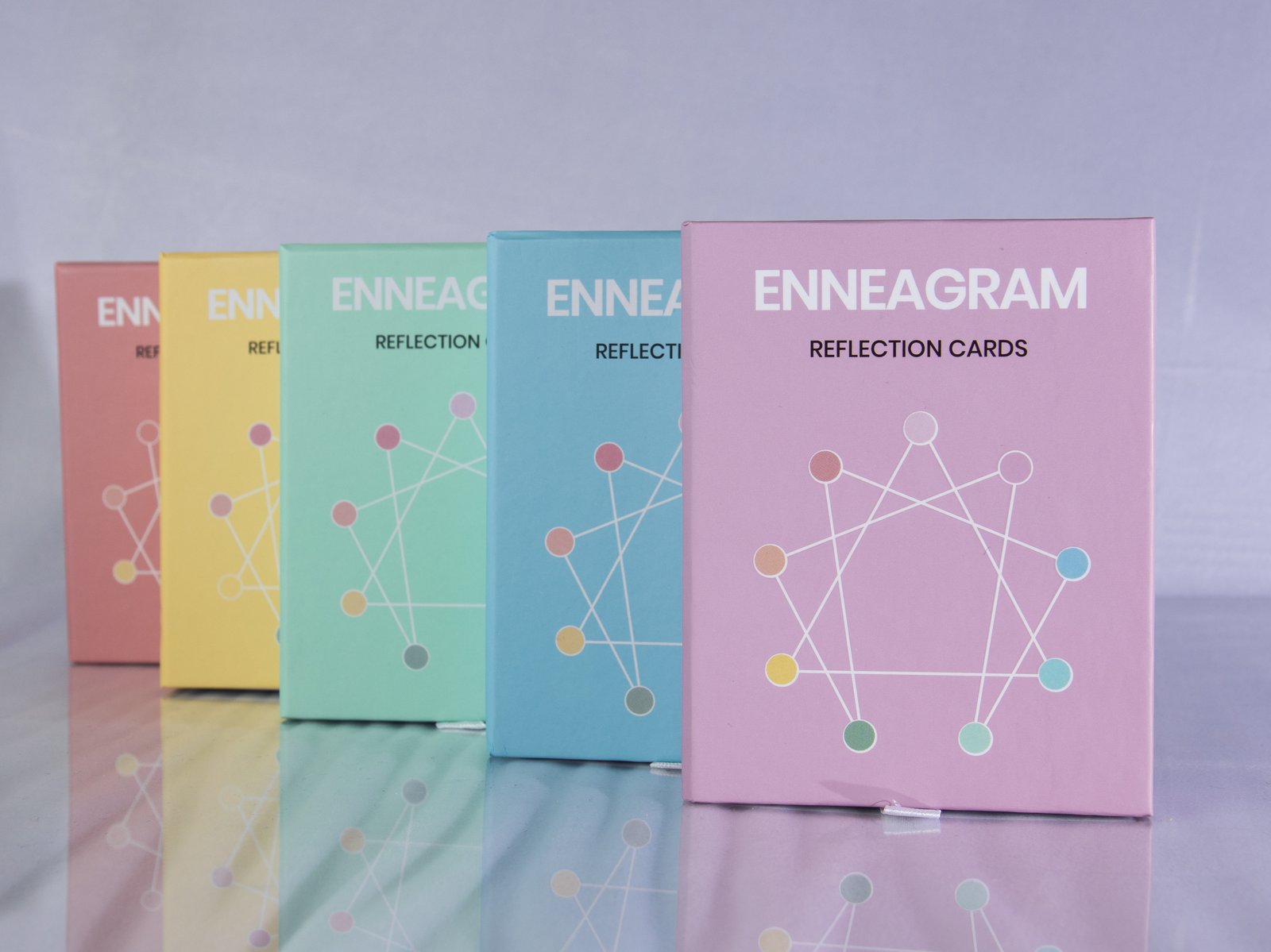
Already know your Enneagram type?
Enneagram Reflection Cards
Designed to engage, motivate & challenge
The perfect resource for anyone who knows their Enneagram type and is looking for further tools for transformation.